
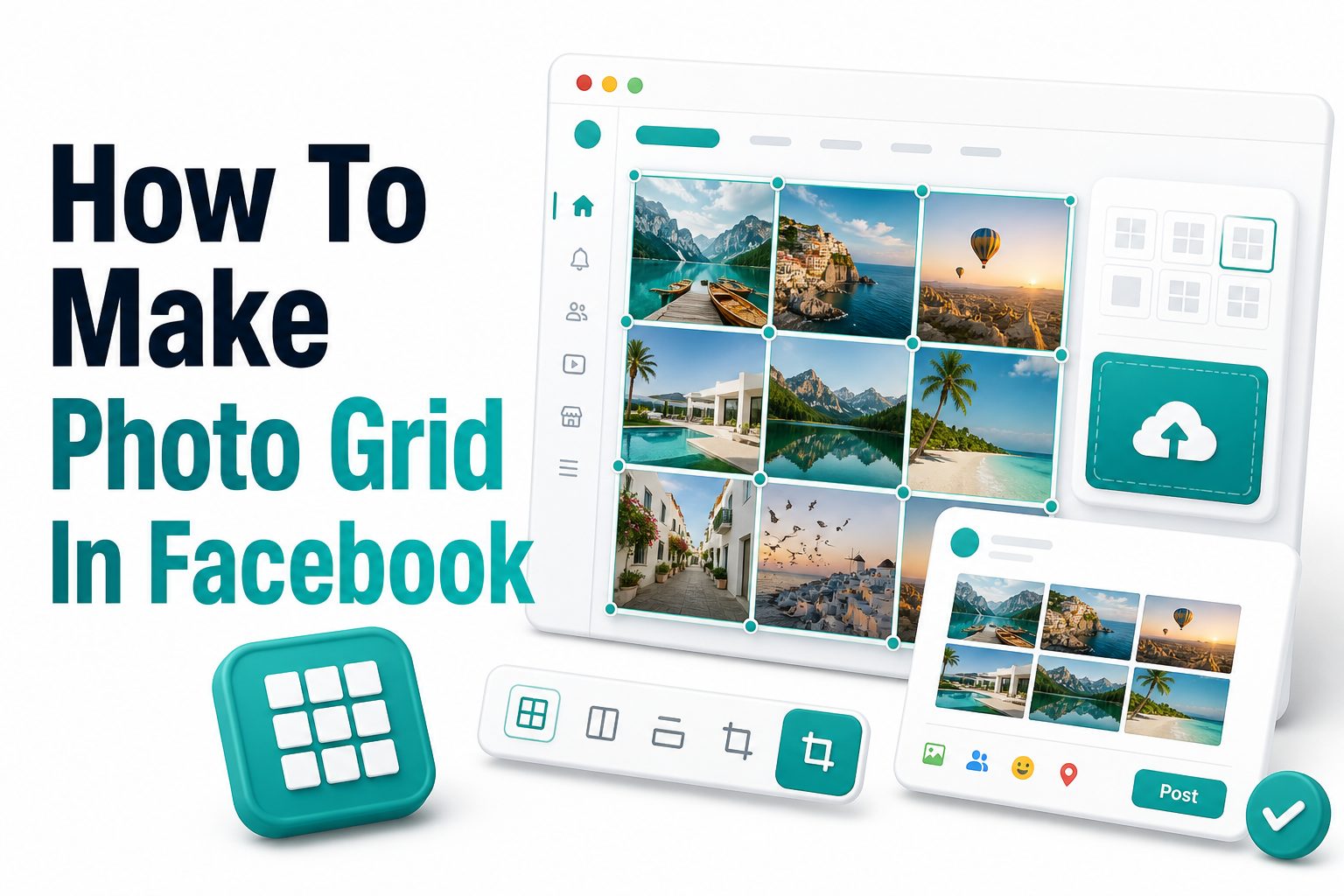
Posting several photos at once can make your Facebook update feel more complete, organized, and visually appealing. Instead of uploading one image after another without structure, a photo grid helps your audience see a collection of moments in a clean layout. If you want to learn how to make photo grid in facebook, the good news is that Facebook already creates grid-style layouts automatically when you upload multiple images.
Still, the final look depends on the number of photos, image orientation, upload order, and whether you use Facebook’s built-in post composer, Stories, or an outside collage tool. A thoughtful grid can make birthday posts, travel albums, product showcases, event recaps, and family memories look far more polished. This guide walks you through the practical steps, best photo choices, layout tips, and common mistakes so your Facebook photo grid looks intentional instead of random.
Why Facebook Photo Grids Matter
A Facebook photo grid helps people scan several images quickly without opening each one separately. This matters because most users scroll fast, especially on mobile. A clean grid gives your post a stronger visual hook and makes viewers more likely to pause, react, or comment.
Photo grids also give context. A single picture may show one moment, but a grid can tell a fuller story. For example, a travel post can show scenery, food, friends, and a landmark together, giving the audience a richer view of the experience.
How Facebook Creates Photo Grids Automatically
Facebook usually builds a grid when you upload multiple photos to one post. The platform decides the layout based on how many images you select and the shape of each photo. Square, vertical, and horizontal images can all affect how the final preview appears.
The first photo often receives the most visual weight, especially when Facebook creates a larger lead image. That means upload order matters. If one photo best represents the whole post, select it first so the grid has a stronger focal point.
Quick Benefits of Using a Facebook Photo Grid
A photo grid can improve both presentation and engagement when used with care.
- Makes multi-photo posts easier to view
- Helps tell a story in one compact layout
- Gives important images more visual impact
- Works well for events, products, trips, and milestones
- Keeps your feed cleaner than separate single-image posts
- Encourages viewers to click through the full set
Best Times to Use a Photo Grid on Facebook
Photo grids work especially well when your images belong together. Event highlights, wedding moments, family gatherings, real estate listings, restaurant dishes, fitness progress, and business product collections are all strong use cases. The grid format keeps related photos connected in one post.
You should avoid grids when each image needs a full explanation or individual attention. If every photo has a separate message, album captions or separate posts may work better. A grid is strongest when the images support one shared theme.
How to Make a Photo Grid in a Facebook Post
Open Facebook and start a new post from your profile, page, or group. Tap or click Photo/Video, then select multiple images from your device. Arrange the photos in the order you want before publishing, placing your most important image first.
After selecting the images, Facebook will preview them as a grid-style post. Add a caption that explains the collection, tag people if needed, choose your audience, and publish. The layout may look slightly different on desktop and mobile, so keep images simple and clear.
Photo Grid Posting Checklist
Use this checklist before publishing your grid-style Facebook post.
- Choose photos that share one clear theme
- Place the strongest image first
- Avoid mixing too many shapes if layout matters
- Crop distracting edges before uploading
- Keep faces and key objects near the center
- Write a caption that adds useful context
- Preview the post before publishing
- Check privacy settings before sharing
Choosing the Right Photos for a Clean Grid
The best photo grids begin before you open Facebook. Choose images that look good together in color, lighting, and subject matter. A set of bright outdoor photos usually feels more balanced than a mix of dark indoor shots, screenshots, and blurry images.
Try to remove duplicates before uploading. If three photos show nearly the same pose, keep the strongest one. A smaller grid with better images often performs better than a crowded post filled with repetitive shots that do not add new value.
How Photo Order Affects the Grid Layout
Facebook does not always give every image equal space in the preview. The first photo may become the anchor image, while the remaining photos appear smaller beside or below it. This is why the first selection should be the most eye-catching image.
For personal posts, choose the photo that captures the emotion of the moment. For business posts, choose the clearest product, offer, or result. The rest of the grid should support that first image instead of competing with it.
Comparison of Common Facebook Photo Grid Uses
Use Case | Best Photo Count | Best First Image | Caption Style
Birthday post | 4 to 6 photos | Smiling portrait | Warm and personal
Travel recap | 5 to 8 photos | Landmark or scenic view | Story-driven
Product showcase | 3 to 5 photos | Main product shot | Clear and benefit-led
Event recap | 6 to 10 photos | Crowd or highlight moment | Informative and lively
Before and after | 2 to 4 photos | Final result | Short and explanatory
Making a Facebook Photo Grid on Mobile
On the Facebook mobile app, tap the post box, choose Photo/Video, and select several images from your phone gallery. The app will add them to one post and display them in a grid preview. You can usually reorder photos before posting.
Mobile uploading is convenient, but phone galleries often contain screenshots, duplicates, and low-light images. Take a moment to review your selected photos. A quick crop or brightness adjustment can make the grid look far more polished on small screens.
Making a Facebook Photo Grid on Desktop
On desktop, open Facebook in your browser and start a new post. Click Photo/Video, select multiple image files, and wait for them to upload. Desktop can be easier when your photos are stored in organized folders from a camera or design project.
Desktop posting also gives you more room to review the grid preview and caption. If you manage a business page, this can help you maintain a stronger brand presentation. For more visual content planning, see [Internal Link: Facebook Content Strategy].
Tips for Better Facebook Photo Grid Layouts
Small choices can make your grid look more professional.
- Use similar lighting across all photos
- Keep the main subject centered
- Avoid cluttered backgrounds when possible
- Mix wide and close-up shots with purpose
- Do not overload the grid with too many images
- Use the first image as the visual summary
- Crop photos before uploading rather than after posting
- Keep captions short enough to support the images
How Many Photos Work Best in a Facebook Grid
Three to six photos usually create the cleanest Facebook grid for everyday posts. This range gives viewers enough variety without making the preview feel crowded. It also encourages people to tap through the full set if they want more detail.
For larger events, eight to ten photos can still work, but the first few images carry most of the visual impact. If you have many photos, consider creating a Facebook album instead of relying only on one feed post.
Using Facebook Albums for Larger Photo Collections
A Facebook album is better when you want to share many related photos with titles, dates, and longer organization. Albums are useful for vacations, conferences, school events, weddings, and business portfolios where people may want to browse slowly.
You can still share an album preview on your timeline, and Facebook may display a grid from the album’s first photos. Choose the album cover carefully because it sets the tone for the full collection and affects whether people click.
Photo Count Guide for Facebook Posts and Albums
Photo Count | Best Format | Why It Works
2 photos | Single post | Good for comparisons or paired moments
3 to 6 photos | Grid post | Balanced, clean, and easy to scan
7 to 10 photos | Grid or album | Works for highlights with some variety
11 to 30 photos | Album | Better organization and browsing
30 or more photos | Album series | Easier for viewers to follow
How to Make a Custom Photo Grid Before Uploading
If you want full control over the layout, create a collage before uploading it to Facebook. Tools like Canva, Adobe Express, Photoshop, or phone collage apps let you choose exact spacing, borders, sizes, and image placement.
This approach works well for announcements, promotions, mood boards, testimonials, and portfolio posts. Instead of relying on Facebook’s automatic layout, you upload one finished image. That gives you predictable results across mobile, desktop, and page previews.
Best Tools for Creating Facebook Photo Grids
Canva is one of the easiest options for non-designers because it offers ready-made collage layouts. Adobe Express is another strong choice for branded social graphics. Phone apps can also work well for quick family, travel, or event collages.
For advanced edits, Photoshop or Affinity Photo gives more control over spacing, resolution, and color correction. Business owners may prefer templates so every post feels consistent. For more design help, visit [Internal Link: Social Media Image Sizes].
Tool Options for Custom Photo Grids
Different tools suit different needs.
- Canva: Best for quick templates and simple branded layouts
- Adobe Express: Good for polished social graphics
- Photoshop: Best for detailed control and professional editing
- Google Photos: Useful for fast personal collages
- Layout apps: Good for mobile-first casual posts
- Affinity Photo: Strong option for designers who avoid subscriptions
Facebook Photo Grid Size and Image Quality Tips
For sharp results, start with high-resolution photos. Facebook compresses images after upload, so small or blurry files can look worse once published. Whenever possible, use images that are at least 1080 pixels wide for strong mobile display.
Avoid adding tiny text inside grid images. Text may become hard to read after compression, especially on phones. If you need to include details, put them in the caption or create a custom single-image collage with larger, readable text.
Using Captions to Support Your Photo Grid
A caption should explain why the images matter, not repeat what viewers can already see. For personal posts, a short story or context line works well. For business posts, mention the product, event, result, location, or next action.
If you are sharing a grid for a page, keep the first sentence strong because Facebook may truncate longer captions. Put the most important message early, then add details. This helps users understand the post before deciding to expand it.
Image Quality Checklist
Before uploading, review these details.
- Use clear, well-lit images
- Avoid screenshots unless needed
- Remove blurry duplicates
- Keep important subjects away from the edges
- Use high-resolution files
- Limit small text inside images
- Check colors for consistency
- Preview the post on mobile if possible
How to Make a Photo Grid for Facebook Stories
Facebook Stories include layout features that let you place multiple photos in one story frame. Open the story creator, choose a layout or collage option, then add photos into each section. You can adjust placement before publishing.
Stories are more temporary than feed posts, so they work well for quick updates, behind-the-scenes images, event moments, and casual recaps. Keep story grids simple because viewers only see them briefly before tapping to the next story.
How to Make a Photo Grid for a Facebook Page
For a Facebook Page, the process is similar to a personal profile, but the strategy should be tighter. Choose images that support your brand, service, or message. A page grid should look intentional because it represents a business or public identity.
Product pages can use grids to show different angles, color options, customer photos, or feature highlights. Service businesses can show project stages, team moments, or before-and-after results. Consistent editing helps your page feel more reliable and professional.
Story and Page Grid Tips
Use these tips for stronger story and page layouts.
- Keep story grids uncluttered
- Use vertical images for Stories when possible
- Make page posts visually consistent
- Choose business images with a clear purpose
- Add captions that encourage a useful action
- Avoid overdecorating branded photo grids
- Use customer or event photos with permission
- Test how grids look on mobile first
Common Mistakes to Avoid
One common mistake is uploading too many similar photos. Viewers do not need ten versions of the same pose or product angle. Variety keeps the grid interesting and helps each image earn its place in the post.
Another mistake is ignoring the crop. Facebook grid previews may trim photo edges, especially for vertical or wide images. If faces, text, or products sit too close to the border, they may appear awkwardly cut off in the preview.
Privacy and Tagging Considerations
Before publishing any photo grid, check who can see it. Personal moments, children’s photos, workplace images, and private events may need limited audience settings. Facebook gives you audience options, but it is your responsibility to choose carefully.
Tagging can increase reach, but it should be done thoughtfully. Not everyone wants to be tagged in public posts. For professional pages, get permission before using customer photos, employee images, or event attendee pictures in promotional content.
Important Privacy Reminders
Photo grids often include several people or locations, so review them carefully.
- Check your audience setting before posting
- Ask permission before sharing sensitive images
- Avoid posting private addresses or documents
- Be careful with children’s photos
- Tag only people who are comfortable being tagged
- Remove location details when privacy matters
- Review backgrounds for personal information
- Use page permissions correctly for business posts
How Businesses Can Use Facebook Photo Grids
Businesses can use photo grids to make posts more useful without overwhelming followers. A restaurant might show a seasonal menu, a salon might show hairstyle results, and a contractor might show project stages. Each image should support a clear message.
Photo grids also work well for social proof. Customer results, event attendance, workshop snapshots, and behind-the-scenes photos can build trust. Keep the layout clean and avoid making every image feel like an advertisement. Authentic visuals often perform better.
Using Photo Grids for Events and Recaps
Event posts are one of the best uses for Facebook grids. A good recap can show the venue, speakers, guests, activities, and key moments in one visual package. This helps people who missed the event quickly see what happened.
For event grids, choose a strong opening image that captures the energy or purpose. Then add supporting shots that show variety. Avoid posting every photo at once unless you are creating an album, because a crowded grid can reduce impact.
Business Photo Grid Ideas
Use these ideas when planning page content.
- Product launch highlights
- Customer before-and-after results
- Event recap images
- Staff introductions
- Behind-the-scenes production shots
- Seasonal menu or collection previews
- Real estate property features
- Portfolio project stages
How to Make Facebook Photo Grids Look More Professional
Professional-looking grids usually come from consistency. Use similar editing, balanced brightness, and a clear subject in every image. You do not need heavy filters, but the photos should feel like they belong in the same post.
Composition also matters. Mix close-ups, medium shots, and wider context images. A grid made only of close-ups can feel cramped, while a grid made only of wide shots may lack emotion or detail. Variety keeps the viewer engaged.
Accessibility Tips for Facebook Photo Grids
Accessibility is often overlooked in photo posts. When images include important information, add it in the caption so people using screen readers or low-bandwidth settings can still get the message. Avoid relying only on text inside images.
Facebook may generate automatic alt text, but it is not always accurate. When available, add custom alt text for important images. This is especially useful for business pages, educational posts, public announcements, and content meant to serve a wider audience.
Professional Grid Best Practices
A polished Facebook grid comes down to simple habits.
- Edit photos consistently
- Use a clear first image
- Keep colors balanced
- Avoid heavy filters
- Add useful caption context
- Include important details outside the image
- Use alt text when available
- Review the grid before publishing
Troubleshooting Facebook Photo Grid Problems
If your grid does not look the way you expected, the issue may be image shape, upload order, or Facebook’s automatic layout rules. Try removing one image, reordering the set, or cropping photos to similar dimensions before uploading again.
If photos appear blurry, start with larger files and avoid repeatedly saving compressed versions. If the layout changes after posting, remember that Facebook displays previews differently across devices. A custom collage image is best when exact layout control matters.
When to Use a Custom Collage Instead of Facebook’s Grid
A custom collage is the better choice when spacing, branding, text placement, or image order must remain fixed. This is common for promotions, announcements, portfolio previews, and campaigns where the visual layout needs to be controlled.
Facebook’s automatic grid is better for natural, casual sharing. It is fast, simple, and familiar to users. Choose the method based on your goal: quick storytelling for everyday posts or precise design control for planned content.
Final Tips Before Posting
Review these final details before publishing your grid.
- Confirm the strongest image appears first
- Check that no faces are awkwardly cropped
- Make sure the caption explains the set
- Remove weak or repetitive photos
- Choose the right audience setting
- Preview the post on mobile when possible
- Use an album for large collections
- Use a custom collage for fixed layouts
Conclusion
Creating a strong Facebook photo grid is mostly about choosing the right images, placing them in the right order, and knowing when to rely on Facebook’s automatic layout versus a custom collage. The platform makes multi-photo posting simple, but the best results come from thoughtful photo selection, clean composition, and captions that add context.
For personal users, grids are a practical way to share memories without cluttering the feed. For businesses, they can showcase products, results, events, and brand personality in a compact format. Keep the first image strong, avoid overcrowding, review privacy settings, and use albums when you have a large collection. Once you know how to make photo grid in facebook, you can turn ordinary multi-photo posts into organized, engaging updates that feel clear and intentional.
FAQ
Can I manually choose the Facebook grid layout?
Facebook does not offer full manual control over standard post grid layouts. You can influence the result by changing photo order, image count, and crop size. For exact control, create a collage first and upload it as one image.
How many photos should I add to a Facebook grid?
Three to six photos usually work best for a clean grid post. This gives enough variety without making the preview feel crowded. For larger collections, a Facebook album is usually easier for viewers to browse.
Why does Facebook crop my photo grid images?
Facebook crops images to fit its automatic preview layout. Vertical, horizontal, and square photos may display differently. Keep important faces, text, and products near the center of each image to reduce awkward cropping.
Can I make a photo grid in Facebook Stories?
Yes, Facebook Stories often include layout or collage options. Open the story creator, choose a layout, and add multiple photos. Story grids work best with simple images because viewers see them for only a few seconds.
Should businesses use Facebook photo grids?
Yes, businesses can use photo grids for products, events, results, team moments, and customer stories. The key is to keep the images clear, consistent, and purposeful so the post supports a specific message or action.
0 Comments